Last updated: July 17, 2026.
Medical device manufacturer Bard faces a growing number of lawsuits over injuries from its PowerPort implantable catheter devices. As of July 2026, more than 3,300 product defect cases are pending in Arizona federal court. The first bellwether trial was held in spring 2026, and the next trial is scheduled for August 2026, with additional trials set through early 2027.
Doyle APC attorneys are reviewing injury claims involving catheter fractures and migrations through blood vessels, life-threatening infections and blood clots, cardiac complications requiring intervention, and device failures requiring surgical removal.
How to Identify if You Have a Bard PowerPort
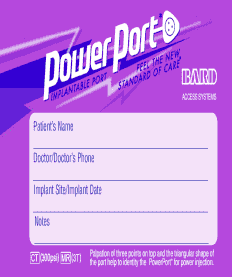
Patients who receive Bard PowerPort devices are typically given a PowerPort ID Card by their implanting physician. This distinctive pink card contains critical information about the specific device including the manufacturer’s name, device name, model number, serial number, lot number, and implantation date.
Some recipients may also receive a rubber PowerPort bracelet with different colors identifying the specific port device implanted. These identification items are essential because medical providers must know exactly which port device was implanted, as different ports have different pressure ratings for fluid injection.
If you’re unsure whether you have a Bard PowerPort device, check your medical records or contact your healthcare provider who performed the implantation procedure.
PowerPort Device Complications
The Bard PowerPort litigation involves several documented device complications that have led to serious patient harm. Court records show that PowerPort failures often manifest as catheter fractures, where pieces of the device break off and migrate through blood vessels. These fragments can cause severe damage, requiring emergency medical intervention and device removal.
Other significant complications documented in the litigation include deep vein thrombosis, where dangerous blood clots form around the catheter, pulmonary embolism, which occurs when clot fragments travel to the lungs, and tissue erosion, where the device damages surrounding blood vessels and tissue. Many patients have experienced chronic infections, sepsis, and other serious conditions requiring removal of the device, while others report complete port failure that prevents proper medication delivery.
A particularly concerning issue is Pinch-Off Syndrome, where the catheter becomes compressed between the collarbone and first rib. This compression can lead to device malfunction and potential fracture of the catheter.
Device failures may require additional surgeries, extended hospitalization, and ongoing medical treatment. These complications often result in significant medical expenses, lost wages, and other damages that may be compensable through legal action. In the most tragic cases, PowerPort complications have resulted in wrongful death.
Cases involving documented catheter fracture, fragment migration, or surgical removal of a failed device should be reviewed promptly, especially where the explanted device or post-removal imaging has been preserved, as this physical evidence can be critical to proving a claim.
Who Qualifies for a Bard PowerPort Lawsuit?
You may qualify to file a Bard PowerPort lawsuit if all of the following apply to you or a loved one:
- You were implanted with a Bard PowerPort or another port catheter device sold under the PowerPort brand, including the PowerPort MRI Implantable Port, Groshong MRI Implantable Injection PowerPort, or Groshong Central Venous Catheter.
- You experienced a serious complication linked to the device, such as catheter fracture, fragment migration, infection or sepsis, blood clots, pulmonary embolism, cardiac injury, or vascular damage.
- The complication required medical treatment, such as surgical removal of the device, hospitalization, or another medical intervention.
Family members may be eligible to pursue a claim where a PowerPort complication contributed to the death of a loved one. Deadlines to file, called statutes of limitations, vary by state and typically run from the date of injury or the date you discovered the device caused your injury. Because these deadlines can expire quickly, we recommend having your case reviewed as soon as possible. The review is free and confidential.
July 2026 Litigation Update
The Bard PowerPort lawsuits are consolidated in Arizona federal court as IN RE: Bard Implanted Port Catheter Products Liability Litigation, MDL No. 3081. Judge David G. Campbell is overseeing the proceedings.
July 2026: More than 3,300 cases are now pending in the MDL, with more than 100 new cases filed each month. Both sides are filing pretrial motions ahead of the second bellwether trial, scheduled to begin August 18, 2026. That trial involves a catheter fracture claim, the type of mechanical device failure at the core of the design defect allegations against Bard.
June 2026: The plaintiff in the first bellwether trial asked the court to set aside the verdict and order a new trial based on problems with the jury instructions. The court also confirmed the second bellwether case and the remaining trial schedule, with trials continuing through early 2027.
May 2026: The first bellwether trial, involving infection related claims, was tried to verdict. While the jury found for the defendants on the claims it decided, it was unable to reach a unanimous decision on the central question in the litigation: whether the PowerPort catheter is defectively designed. That issue remains unresolved.
April 2026: The first bellwether trial began on April 21, 2026 in the District of Arizona, the first time a jury heard evidence in the PowerPort litigation.
Legal analysts estimate the litigation could ultimately involve 8,000 to 12,000 claims based on the approximately 300,000 PowerPort devices implanted nationwide.
Judge Campbell selected a series of bellwether cases for trial spanning the range of injuries in the litigation, including infection, blood clot, and fracture claims. Trials will continue through early 2027, and the results of these test cases will help establish settlement values for the thousands of remaining claims.
A critical development occurred in December 2024 when the court resolved questions about corporate liability. Becton Dickinson, which acquired C.R. Bard for approximately $24 billion in 2017, has been confirmed as a defendant facing full exposure for settlements or judgments. This ensures substantial financial resources stand behind any compensation awarded to injured patients.
Bard PowerPort Settlement Amounts
No global Bard PowerPort settlement has been reached as of July 2026, and no jury has awarded damages to a plaintiff to date. The bellwether trials now underway are expected to shape settlement negotiations. Historically, medical device manufacturers rarely negotiate global settlements until several bellwether trials have tested the strength of the claims before juries.
Because no settlements have occurred, any specific dollar figures you may see published for PowerPort cases are speculation. When settlements are reached in device litigation, individual amounts typically depend on the type and severity of the injury, the medical treatment required, the strength of the evidence connecting the device to the injury, and damages such as medical expenses, lost income, and pain and suffering. Cases involving documented catheter fracture or surgical removal of a failed device, where the explanted device has been preserved, are often among the strongest.
We will update this page as the bellwether trials progress and settlement discussions develop.
PowerPort Catheter Defects Leading to Device Failure
The PowerPort devices were designed to use catheters made of a polymeric mixture of polyurethane and barium sulfate called ChronoFlex AL. Barium sulfate is known to adversely affect the mechanical integrity of polyurethane by dissociating from the catheter’s surface, leaving microfractures and other changes which degrade the catheter’s integrity.
The lawsuits allege Bard’s manufacturing process involves using too high a concentration of barium sulfate, resulting in uneven particle distribution that creates weak points throughout the catheter. Over time, these areas of degradation and structural weakness can cause the catheter to fracture or allow for the accumulation of bacteria causing infection.
FDA Adverse Event Reports
A key issue in this litigation involves Bard’s reporting of adverse events. For years, Bard utilized an FDA exemption program that allowed the company to submit adverse event reports to a non-public database rather than the publicly accessible MAUDE database. This Alternative Summary Reporting Program permitted manufacturers to file quarterly or annual summary reports instead of individual reports for each adverse event.
An investigative report by Kaiser Health News in 2019 exposed this practice, revealing that millions of adverse events for various medical devices had been hidden from public view. Plaintiffs allege Bard filed approximately 87 to 90 percent of PowerPort adverse events through this program, keeping over 9,000 injury reports hidden until the FDA terminated the exemption and publicly released the historical data in 2019.
The lawsuits claim that Bard categorized PowerPort complications as compression or pinch-off events, characterizing them as known risks resulting from physician error rather than device defects. Plaintiffs contend this allowed the company to avoid public disclosure of the true scope of patient injuries.
PowerPort Device Background
Bard’s PowerPort is an implantable vascular access device, sometimes called a port-a-cath, designed to provide repeated access to the vascular system for the delivery of medication, intravenous fluids, parenteral nutrition solutions, and blood products. The device is about the size of a quarter and is surgically placed under the skin with a catheter inserted into one of the body’s large central veins.
Because PowerPort devices allow high injection rates of contrast agents used in CT and MRI scans, they are often implanted in cancer patients receiving chemotherapy. These patients, already facing serious health challenges, deserve medical devices that function safely and reliably.
Bard’s first PowerPort device was cleared by the FDA via the 510(k) process. Unlike the more rigorous Pre-Market Approval process, which requires significant data showing a device is safe and effective, the 510(k) process only requires showing a device is substantially similar to one already on the market.
Several implantable ports and catheters are sold under Bard’s PowerPort brand, including the Bard PowerPort MRI Implantable Port, Bard Groshong MRI Implantable Injection PowerPort, and Groshong Central Venous Catheter. Regardless of which specific model you received, you may be eligible to pursue a claim if you have experienced complications.
Bard PowerPort Legal Claims and Defendants
The primary claims in the PowerPort lawsuits include strict liability for design and manufacturing defects, failure to warn patients and physicians of known risks, negligence, breach of warranties, fraudulent concealment of adverse event data, and violation of state consumer protection laws.
The defendants are Bard Access Systems, Inc., C.R. Bard, Inc., and Becton, Dickinson and Company. Becton Dickinson’s prior experience resolving the related Bard hernia mesh litigation for over $1 billion demonstrates the company’s capacity for large-scale medical device settlements.
Bard PowerPort Lawsuit FAQs
Is there a Bard PowerPort recall?
There is no active recall of Bard PowerPort devices. Certain PowerPort products were recalled in 2019 and 2021 for issues unrelated to the defect claims in this litigation, and both recalls have since been terminated. The lawsuits do not depend on a recall; they allege the devices are defectively designed.
Is the Bard PowerPort lawsuit a class action?
No. The federal cases are consolidated in multidistrict litigation, MDL No. 3081, in the District of Arizona. In an MDL, pretrial proceedings are coordinated but each plaintiff keeps an individual case and an individual recovery based on their own injuries.
What is the average Bard PowerPort settlement?
There is no average settlement because no PowerPort settlements have been reached as of July 2026. The value of individual claims will depend on the type and severity of the injury, the treatment required, and the strength of the evidence. The bellwether trials now underway are expected to shape future settlement negotiations.
What happened in the first PowerPort trial?
The first bellwether trial was held in spring 2026 and involved infection related claims. The jury found for the defendants on the claims it decided but could not reach a unanimous decision on whether the PowerPort is defectively designed. The plaintiff has asked the court to order a new trial, and the design defect question remains unresolved.
Which devices are included in the litigation?
The litigation involves port catheter devices sold under Bard’s PowerPort brand, including the Bard PowerPort MRI Implantable Port, the Groshong MRI Implantable Injection PowerPort, and the Groshong Central Venous Catheter. If you are unsure which device you received, your PowerPort ID card or your medical records will identify the model.
How long do I have to file a Bard PowerPort lawsuit?
Deadlines vary by state under laws called statutes of limitations, and typically run from the date of your injury or the date you discovered the device caused your injury. Some deadlines are as short as one to two years. Because your deadline depends on your state and your facts, we recommend a free case review as soon as possible.
Free Case Evaluation
Have you or a loved one experienced complications with a PowerPort, such as device migration, fractures, severe infections, or blood clots? In cases involving wrongful death, family members may be eligible to pursue claims. Our experienced medical device attorneys will review your medical records at no cost and explain your legal options.
We handle all cases on a contingency basis, which means you pay nothing unless we recover compensation for you. Statutes of limitations restrict the time available to file a claim, so prompt consultation is advisable.
GET A FREE CASE EVALUATION